
What is a Proximity Extension Assay (PEA)?
In short
The Proximity Extension Assay (PEA) is a highly sensitive method for detecting and measuring specific proteins in complex biological samples such as blood plasma, serum or spinal fluid. It combines two molecular tools: antibodies, which specifically recognise and bind the protein of interest, and DNA amplification, which turns even tiny amounts of protein into a strong, measurable signal. This makes PEA ideal for early disease detection, biomarker discovery and advanced medical research — especially when only small sample amounts are available.
How does PEA work?
First, two antibodies are made to recognise the same target protein — each carrying a short, unique piece of DNA. When both antibodies find and bind their target protein, the DNA strands they carry are brought into close proximity. Only when this “double match” occurs can the DNA pieces be joined together by a special reaction. The result is a new DNA strand that serves as a unique signal representing the protein.
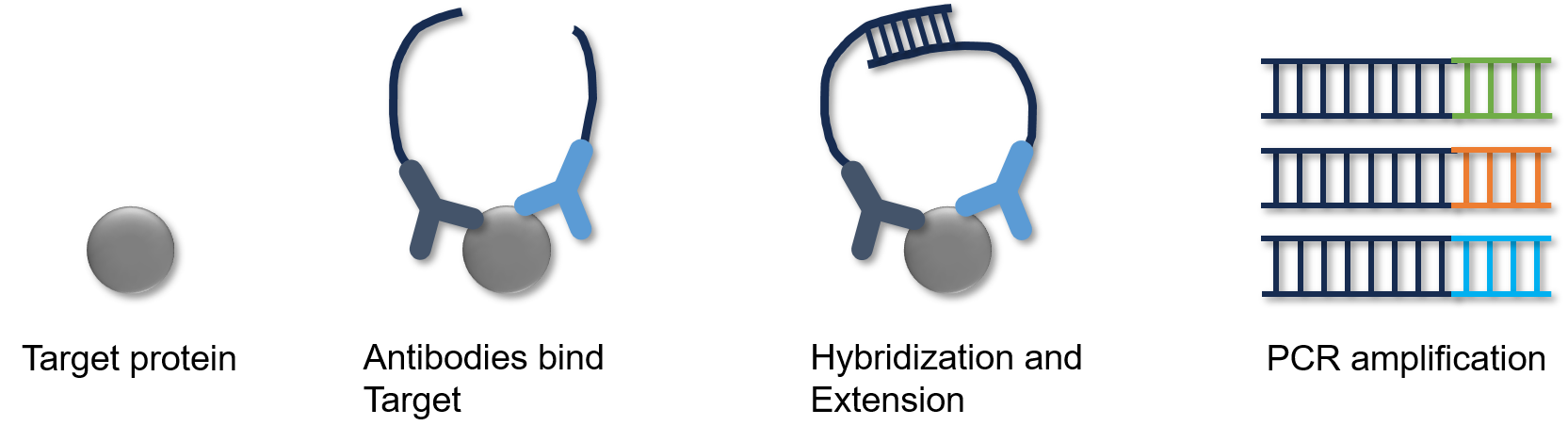
This new DNA product can be multiplied many times over using methods such as qPCR (quantitative polymerase chain reaction), making it easy to detect even if the protein was present only in very small quantities. The amount of DNA signal created directly reflects the amount of protein in the starting sample.
This double-confirmation system gives PEA both high specificity (accuracy for the right protein) and high sensitivity (the ability to spot very small amounts).
PEA platforms: Olink and SPEAR Bio
Two of the best-known PEA platforms so far are Olink and SPEAR Bio:
Olink pioneered PEA technology and is recognised for reliable, highly sensitive protein detection in routine laboratory use. It is renowned for measuring many proteins at once — a process called multiplexing. Each protein is recognised by a pair of DNA-tagged antibodies; when both bind the protein, a unique DNA signal is created and then amplified, allowing highly specific and sensitive detection across large panels.
SPEAR Bio uses a unique two-step proximity extension mechanism: only when two antibody–DNA probes are bound to the same target protein in close proximity can a special double extension of the DNA occur. This double-extended DNA is the only signal that can be amplified and detected with qPCR, while random or single bindings cannot generate it. This two-stage check — called successive proximity extension — ensures extremely high specificity and sensitivity, allowing reliable protein detection from very small sample volumes.
Frequently asked
Why is PEA so specific?
Why does PEA need so little sample?
What is multiplexing in PEA?
More articles
Assay Development explained
How a test moves from feasibility through optimisation to a fully validated, robust assay.
GMP explained
The quality system that ensures every batch of a regulated product meets its specification.
How does Lateral Flow Testing work?
The capillary-driven technology behind rapid tests, explained step by step.
LAL vs recombinant Factor C (rFC)
The traditional horseshoe-crab test compared with the sustainable, animal-free synthetic alternative.
Sensitivity vs Specificity
The two measures that describe how trustworthy a diagnostic result really is.